
08 Aug The Best Dock Decking Materials for South Florida Waterfront Homes
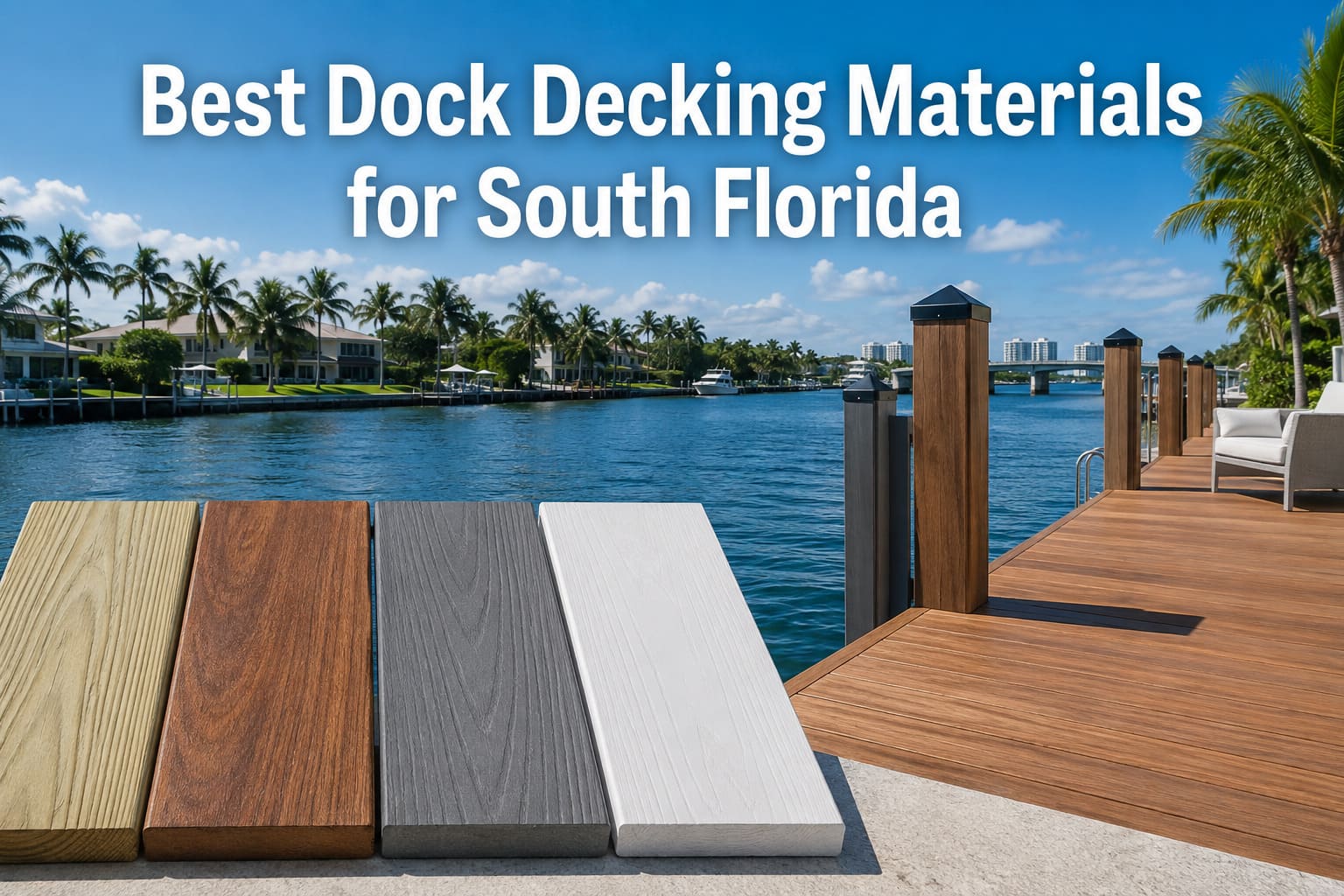
Choosing decking for a South Florida dock is about much more than color. The walking surface must handle intense sunlight, heavy rain, high humidity, salt exposure, foot traffic, fishing equipment, furniture, and regular cleaning. It should also complement the home, provide comfortable access to the water, and fit the owner’s maintenance expectations.
No single decking material is perfect for every waterfront property. The best choice depends on location, dock design, budget, appearance, heat exposure, slip resistance, and how the dock will be used. Understanding the differences among common materials helps homeowners make a decision based on long-term performance instead of appearance alone.
Pressure-Treated Marine Wood
Wood remains popular because it creates a traditional waterfront look and can work well when the correct material, treatment, fasteners, spacing, and installation methods are used. It can also be easier to replace individual boards if localized damage occurs.
The quality and treatment category matter. Material intended for ordinary backyard decking is not automatically appropriate for a marine environment. A dock builder should select wood suited to the project’s exposure and use compatible corrosion-resistant hardware. Cut ends and field modifications may also require proper treatment according to product instructions.
Wood changes as it is exposed to sun and moisture. It may check, split, cup, fade, or develop rough areas over time. Regular inspection, cleaning, and finishing can help maintain its appearance and catch damaged boards before they become a hazard. Homeowners who enjoy natural grain and do not mind periodic maintenance often appreciate a well-built wood dock.
Hardwood Decking
Certain dense hardwoods are selected for their appearance, strength, and natural durability. They can create a high-end finish that pairs well with luxury waterfront homes. Their density can also make installation more specialized because cutting, drilling, fastening, and maintaining proper spacing require care.
Hardwoods may weather to a silver-gray tone unless maintained with a suitable finish. Material sourcing, availability, cost, and environmental certifications should be considered. Because each species behaves differently, the homeowner should discuss the specific product rather than treating all hardwoods as one category.
Composite Dock Decking
Composite decking usually combines manufactured components to create boards designed for consistent appearance and reduced routine finishing. Many homeowners are attracted to composite because it does not require the same staining schedule as natural wood and is available in a wide range of colors and textures.
Product selection is essential. A board marketed for residential decks may have different installation instructions or performance characteristics around water. Expansion, contraction, ventilation, joist spacing, fastening systems, and manufacturer-approved marine applications must be reviewed before installation.
Heat is another consideration. Dark decking exposed to direct South Florida sun may become uncomfortable for bare feet. Lighter colors can help, but actual heat performance varies by product. Samples should be viewed outdoors in full sun whenever possible. Texture and drainage also influence how secure the surface feels when wet.
PVC and Other Synthetic Decking
PVC decking is made without the wood fiber used in many composites. It is generally selected for moisture resistance, consistent appearance, and lower maintenance. Some products are lightweight and designed with capped surfaces that resist staining and fading.
As with composite, the exact product and installation system matter. The substructure must support the decking according to manufacturer requirements, and fastening details must account for movement. Homeowners should compare warranties carefully, especially provisions involving waterfront or commercial exposure, labor, fading, and installation compliance.
Synthetic materials are not maintenance-free. Salt, sunscreen, food, leaves, bird droppings, mildew, and airborne debris still need to be cleaned. The benefit is typically reduced finishing and fewer issues associated with natural wood fibers, not the complete elimination of care.
Aluminum and Specialized Systems
Aluminum decking and other specialized marine systems may be appropriate for certain projects. Aluminum can provide strength, resistance to rot, and a clean contemporary appearance. Some systems are designed to improve drainage or allow light penetration through the dock surface.
These systems may have a higher initial cost and a different visual character than wood. Noise, surface temperature, coatings, electrical considerations, and compatibility with the remaining structure should be evaluated. Specialized products are best considered as part of the entire dock design rather than selected as an isolated finish.
Slip Resistance, Heat, and Barefoot Comfort
Waterfront decking will get wet. Surface texture, board spacing, drainage, algae control, and routine cleaning all affect traction. A heavily textured surface may offer grip but feel rough under bare feet, while a very smooth board may become slippery when contaminated. The best balance depends on whether the dock is used for swimming, fishing, entertaining, boat access, or a combination of activities.
Heat should be evaluated realistically. Color, material composition, air movement, shade, and the direction of the sun can change surface temperatures. Homeowners who use the dock barefoot should prioritize lighter colors, shaded zones, and products with suitable heat characteristics.
Look Below the Decking
New decking cannot correct a weakened structure underneath. Before resurfacing, a marine contractor should evaluate joists, beams, pilings, connections, fasteners, and overall alignment. Installing premium boards over deteriorated framing can shorten the life of the investment and create safety concerns.
The substructure and decking must work as a system. Board dimensions, spans, fastening patterns, ventilation, and drainage should match the selected product. The contractor should also consider utilities, lighting, ladders, cleats, boat lifts, and access panels before the surface is completed.
Choose Materials Around Your Priorities
Homeowners should rank their priorities: natural appearance, low maintenance, cooler surface, initial budget, long-term value, environmental considerations, or a particular architectural style. Reviewing installed examples can be more useful than choosing from a small indoor sample.
Dock Dogs Florida builds and repairs docks throughout Palm Beach and Broward counties. The team can evaluate the existing structure, discuss decking options, and recommend a system suited to the property and intended use. Call (561) 376-4100 to discuss dock decking in Boca Raton, Deerfield Beach, Pompano Beach, Fort Lauderdale, Delray Beach, Boynton Beach, Highland Beach, and surrounding South Florida communities.