
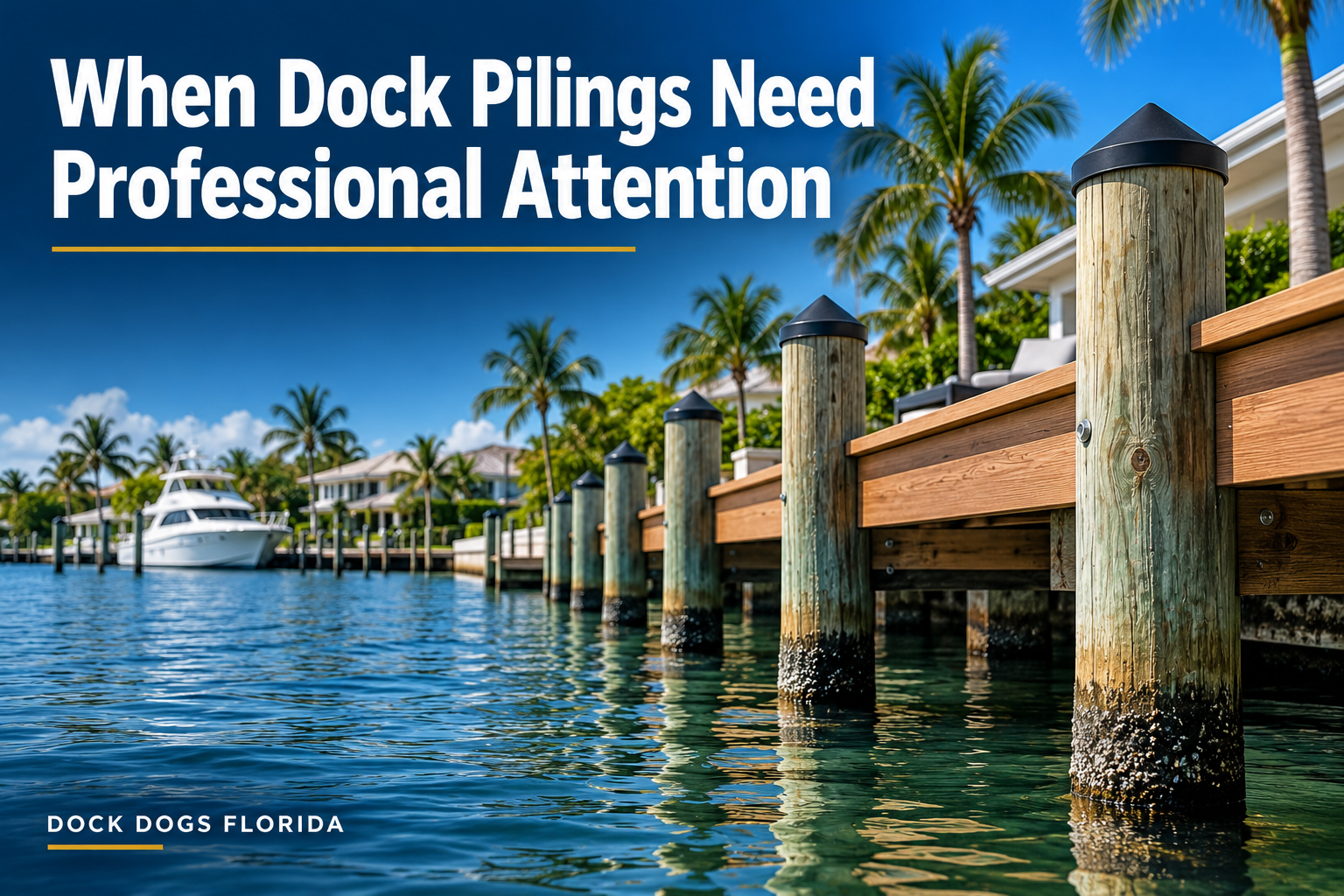
14 Sep When Dock Pilings Need Professional Attention
Fresh decking can make a waterfront property look dramatically better, but the visible surface is only part of a dock. Pilings help support the structure and connect it with the conditions below. When a piling changes position, deteriorates, or becomes damaged, the concern deserves attention beyond a cosmetic repair to the boards above.
For South Florida homeowners, the challenge is knowing what to notice without attempting a structural diagnosis. You do not need to decide whether a piling is strong enough or choose a repair method yourself. Instead, recognize changes, limit access where appropriate, and arrange a professional assessment that considers the dock as a complete structure.
Understand the role of the piling
A dock’s supporting system is designed around its configuration, materials, use, and site conditions. Pilings work with beams, connections, and other components rather than acting as isolated posts. A problem near one support can therefore require a broader review of the surrounding assembly before a contractor recommends what should be repaired or replaced.
Some waterfront posts may also serve mooring or other functions. Do not assume every visible post carries the same load or can be altered in the same way. Existing plans and construction records can help establish intended roles. Where records are unavailable, the contractor may need additional investigation to understand the installation.
Notice movement and alignment changes
A piling that appears to lean differently, a gap near a connection, or a change in the deck’s level can be useful information. Compare current observations with dated photographs if you have them. A new condition matters even when you cannot measure it precisely or determine whether it developed gradually or suddenly.
Do not push, pull, or shake a questionable support to test it. Keep people away from areas that appear unstable and explain the concern when requesting an appointment. A contractor can decide what access, equipment, and professional input are needed. Describing movement accurately is more helpful than trying to prove its cause yourself.
Look beyond ordinary surface appearance
Timber exposed to a waterfront environment may show weathering, staining, checking, or marine growth. Those appearances do not all mean the same thing. A photograph can document what you see, but it cannot establish the condition throughout a member or reveal the extent of a concealed problem beneath the water.
Report material loss, unusual openings, damaged areas, or changes that appear to be progressing. Avoid scraping, drilling, cutting, or covering a suspect section before it is evaluated. An assessment may distinguish between appearance-related maintenance and a condition affecting performance. That distinction influences the work needed and prevents a cosmetic treatment from disguising a larger issue.
Include connections in the conversation
A support can look substantial while its connections need attention. Visible fasteners, brackets, and attachment areas are part of the system a professional may review. Note missing hardware, separation between components, or deterioration around a connection. Share those observations without assuming that tightening or replacing one visible fastener will resolve the situation.
The surrounding framing also matters. A contractor may need to inspect adjacent beams or other members to understand how forces move through the structure. This is one reason a piling concern should not be priced solely from a close-up photograph. The appropriate scope depends on more than the appearance of the post itself.
Report impacts and unusual events
If a boat, floating object, or other event contacts the dock, record the circumstances while they are clear in your memory. Include the approximate date, the location of contact, and what changed afterward. Photographs taken from a safe place can help orient the contractor before a visit and identify areas needing closer examination.
Avoid concluding that there is no problem simply because the deck remains usable. Conversely, a visible mark does not establish the extent of damage. A professional review provides a better basis for decisions than either assumption. If instability or immediate hazards are apparent, restrict access and seek prompt guidance rather than continuing normal use.
Prepare useful information for the assessment
Gather the property address, available plans, previous repair records, and any information about piling materials or installation. Explain whether the concern is new, recurring, or connected with earlier work. If the dock has changed owners, say which parts of its history are known and which details came from someone else.
Also describe how the dock is used. Boat access, mooring arrangements, equipment, and planned changes can affect the questions the contractor asks. Mention a potential larger boat or future redesign early. A repair discussion is more useful when it accounts for the intended use instead of assuming the current arrangement will remain unchanged.
Ask how the proposed work addresses the cause
Once an assessment is complete, request a clear explanation of the findings and recommended scope. Ask which components are included, what additional conditions could be discovered during work, and whether engineering or other specialist involvement is appropriate. Understand any limitations on continued use while decisions or repairs are pending.
Marine construction can also involve project-specific approvals. Confirm the applicable requirements before work begins rather than assuming that existing construction makes every alteration routine. The scope should distinguish evaluation, repair, replacement, and any changes to the dock’s configuration. A written explanation helps everyone understand the intended result and the process for reaching it.
If only a relatively limited area needs work, ask how the repair will relate to the rest of the dock. A localized recommendation should still account for adjacent components and future maintenance. Keep the written findings and photographs together so later decisions can refer to the actual assessment rather than an incomplete recollection of the original conversation.
Discuss piling concerns with Dock Dogs Florida
Dock Dogs Florida works with homeowners on dock repairs, restoration, new construction, and related marine projects. When contacting the team, focus on the changes you noticed and the records available. The purpose of the first conversation is to establish the next practical step, not to diagnose a structural condition from a distance.
If your South Florida dock has a leaning support, visible material changes, or a connection that concerns you, contact Dock Dogs Florida through DockDogsFL.com or call (561) 376-4100. An informed review can help determine what attention is appropriate and how the supporting structure fits into the longer-term plans for your waterfront property.