
21 Sep Seawall Warning Signs to Watch For
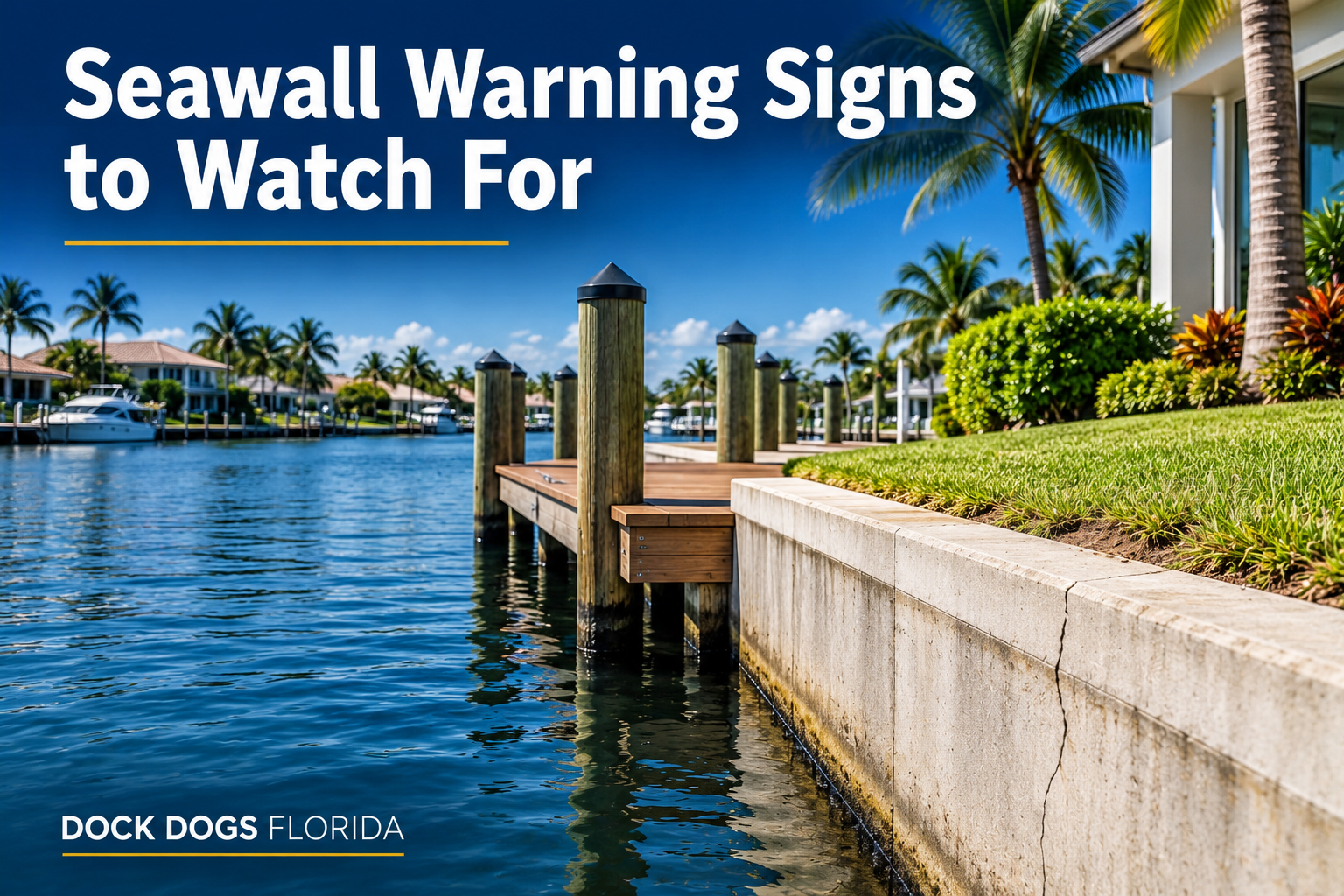
A seawall is easy to treat as part of the scenery until something changes. A crack looks wider, a patch of ground settles, or the waterfront edge no longer appears aligned. For South Florida property owners, recognizing these observations early creates an opportunity to seek guidance before choosing a repair based only on appearance.
Visible warning signs are reasons to investigate, not a diagnosis of failure. Different conditions can look similar, and important components may be concealed. The practical response is to keep a safe distance from questionable areas, document what can be observed without risk, and consult a qualified marine construction professional about the appropriate assessment.
Pay attention to changes in cracks
A mark that has remained unchanged for years presents a different history from one that appeared recently or seems to be extending. Record where a crack is located and when you first noticed it. If older photographs are available, compare them rather than relying entirely on memory or a previous owner’s informal description.
Crack width alone does not tell a homeowner how the wall is performing. Location, surrounding movement, materials, and other conditions may all matter. Avoid selecting a patching product as the first response to an unfamiliar change. A contractor may need to understand the underlying condition before recommending whether surface work or a different approach is suitable.
Note settlement behind the wall
A new depression in the lawn, a gap beneath paving, or an area that feels different underfoot can deserve attention. Stay away from suspected voids and keep children, guests, and pets back. Do not probe the ground or approach the edge to determine how far an opening extends.
Describe the location from a stable area and take photographs only when safe. Filling a depression without investigating it can obscure useful evidence. The contractor may need to consider drainage, soil conditions, adjacent structures, and the wall itself. The goal is to understand why the change occurred before choosing how to restore the surface.
Watch for alignment and separation changes
Look for a cap that appears displaced, sections that no longer meet as expected, or a new separation between the seawall and nearby improvements. These observations are especially useful when you can relate them to a previous photograph. Make a note of whether the change is localized or appears along a longer stretch.
Do not use the wall as a platform for closer inspection if its condition is uncertain. A visual review from the yard has limits, and leaning over the edge can add unnecessary risk. Explain what you noticed and let the professional determine what further examination can be completed safely and effectively.
Consider drainage and neighboring improvements
Waterfront conditions do not exist in isolation. Changes in landscaping, paving, irrigation, or nearby construction may be relevant to a new concern. Tell the contractor what work has occurred and when. That history can help guide the investigation, even when the homeowner cannot tell whether two events are connected.
Do not modify drainage openings or redirect water as an improvised solution. The appropriate approach depends on the existing system and the property. Record blocked areas or unusual water movement and ask for guidance. Understanding the relationship between the wall, the ground behind it, and surrounding improvements supports a more complete assessment.
Include the dock and shoreline transition
A dock, retaining structure, walkway, and seawall can be close together while serving different roles. If you notice gaps or movement where they meet, identify the specific location rather than describing the entire waterfront as one structure. Photographs showing both the detail and the wider setting can make that explanation easier.
A repair proposal should be clear about which parts are included. Work on decking does not automatically resolve a seawall concern, and a wall repair may not include changes to the dock. Ask the contractor to explain the boundaries of the project and whether related work should be coordinated to avoid conflicting plans.
Keep observations useful and organized
Create a simple record with dates, photographs, and a description of each change. Include events such as an impact, unusually high water, or recent work on the property when relevant. Separate what you directly observed from what someone suggested might be happening. Accurate information supports a better discussion than an assumed diagnosis.
Older surveys, drawings, repair invoices, and ownership records may also be useful. Provide what you have, but do not delay reporting an active concern because the file is incomplete. A professional can explain which documents would help and whether further investigation is needed before a meaningful scope of work can be prepared.
Ask about the assessment and repair process
When discussing a recommendation, ask what condition the proposed work addresses and how the conclusion was reached. Find out whether engineering input or other specialist review is appropriate. A written scope should explain the components involved, the expected sequence, and how additional findings will be handled if concealed conditions become visible.
Approvals and permitting requirements depend on the proposed activity and location. Confirm them with the appropriate professionals and authorities before construction. Avoid assuming that a neighboring property’s project establishes what applies to yours. A clear process accounts for the individual site and distinguishes required work from optional improvements or changes to the waterfront layout.
If the property is being purchased or prepared for sale, keep the waterfront review distinct from general visual impressions about the home. Ask which structures were actually assessed and what limitations applied. A clean yard or recently painted surface does not answer every question about concealed waterfront construction. Clear records help owners understand the scope of the review and any recommended follow-up work.
Contact Dock Dogs Florida about shoreline concerns
Dock Dogs Florida offers marine construction services that include docks, bulkheads, retaining walls, repairs, and restoration. If you are concerned about your seawall or the connection between the shoreline and dock, explain the observations and ask what review is appropriate. Do not promise yourself a particular repair before the condition has been evaluated.
For waterfront properties in Deerfield Beach and surrounding South Florida communities, contact Dock Dogs Florida through DockDogsFL.com or call (561) 376-4100. A careful assessment and clearly defined scope can help you understand the next steps for addressing changes along your waterfront and planning related improvements with better information.