
03 Aug Dock Repair or Replacement? How South Florida Homeowners Can Decide
A waterfront dock is exposed to conditions that most outdoor structures never face. South Florida sun, salt air, tides, rain, marine organisms, boat movement, and tropical weather can gradually weaken decking, framing, hardware, and pilings. Some damage is obvious, such as broken boards or a leaning section. Other problems begin below the surface and are easy to overlook until they affect safety or require a larger repair.
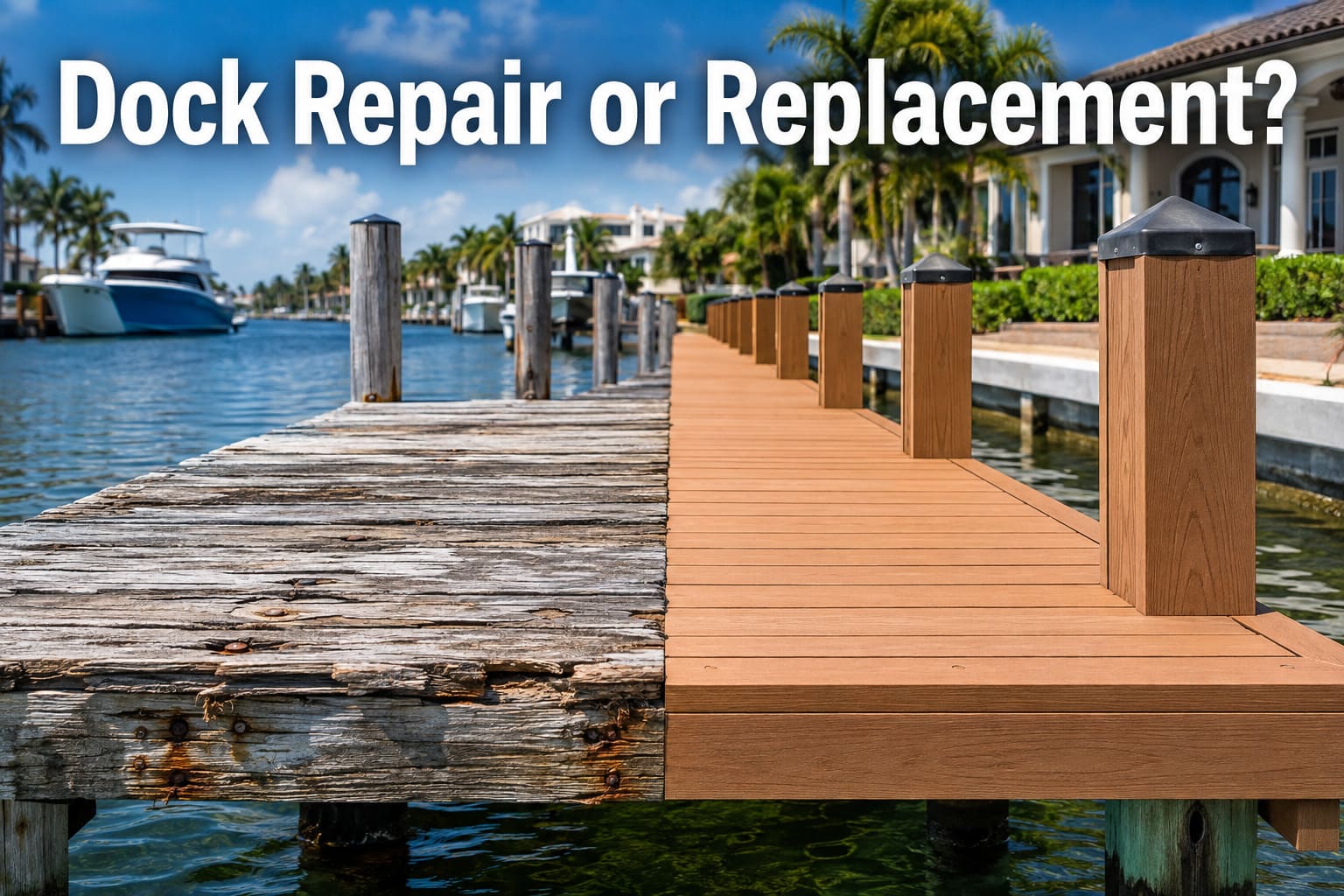
When a dock starts showing its age, homeowners often ask the same question: should it be repaired, or is it time to replace it? The right answer depends on the condition of the structural components, the extent of the deterioration, the dock’s age and design, and how the owner plans to use it. A professional marine-construction inspection can help separate a manageable repair from a structure that has reached the end of its practical service life.
Begin With the Structure, Not the Appearance
Faded boards and surface stains can make a dock look worse than it is. Conversely, new-looking decking can conceal deteriorated framing or unstable pilings. That is why the decision should begin with the components that carry the load.
Pilings support the dock and transfer loads into the ground below the water. Beams, stringers, joists, connections, and fasteners distribute the weight of people, furniture, equipment, and normal waterfront activity. If these components remain sound, replacing damaged decking or isolated hardware may restore the dock without rebuilding everything. If deterioration is widespread below the walking surface, cosmetic work alone will not solve the underlying problem.
Signs That Dock Repair May Be Appropriate
Targeted repair may be practical when damage is limited to a defined area and the remaining structure is stable. Examples include a small number of cracked or splintered deck boards, loose handrails, corroded fasteners, damaged bumpers, worn cleats, or localized framing problems that can be accessed and corrected.
A repair can also make sense when the dock is relatively young, was built to an appropriate design, and has received regular maintenance. The goal should be to correct the cause of the problem rather than simply cover the visible symptom. A loose board caused by one failed fastener is different from repeated movement caused by weakened framing underneath.
Homeowners should also consider whether replacement materials can be integrated properly. New boards should be compatible with the existing structure, and marine hardware should be selected for the environment. A patch that traps moisture, transfers loads improperly, or uses unsuitable fasteners may create another problem later.
Warning Signs That May Point Toward Replacement
Replacement becomes more likely when deterioration affects several major parts of the dock. Multiple unstable pilings, extensive rot, widespread corrosion, recurring movement, sagging framing, major storm damage, or repeated failures in different sections can indicate that isolated repairs will not provide a dependable long-term result.
Noticeable movement deserves prompt attention. A dock should not feel unstable under ordinary use. Changes in alignment, uneven walking surfaces, separating connections, and sections that rise or fall differently can signal structural concerns. Damage below the waterline may require a closer professional evaluation because it is not always visible from above.
Replacement may also be the better investment when the layout no longer fits the property owner’s needs. An older dock may lack safe boarding access, adequate space for a different boat, appropriate lighting, or a practical route from the residence to the water. Rebuilding provides an opportunity to address function, materials, appearance, and future use as one coordinated project.
Compare Long-Term Cost, Not Just Today’s Estimate
A lower repair price can be attractive, but homeowners should ask how long the repair is expected to last and which older components will remain. Repeated repairs to different sections can eventually cost more than a planned replacement while causing ongoing inconvenience.
That does not mean every aging dock should be replaced. A focused repair may add years of useful service when the core structure is sound. The important comparison is between the expected life, scope, and risk of each option. A clear proposal should identify what will be repaired, what will remain, which materials will be used, and whether hidden conditions could change the work once construction begins.
Consider Permits and the Existing Design
Dock work can involve local building requirements, environmental review, waterway restrictions, homeowners-association rules, and authorization related to submerged lands. Requirements vary by location and project scope. A small maintenance task may be treated differently from structural replacement, expansion, or a redesigned dock.
Before work begins, the contractor and property owner should determine which approvals apply. Existing conditions do not automatically guarantee that a new structure can be rebuilt in precisely the same configuration. Water depth, navigation, setbacks, environmental resources, and current rules may affect the design.
Protect the Dock Through Routine Inspections
The best time to identify damage is before a board breaks or a storm arrives. Homeowners can walk the dock periodically and look for loose boards, protruding fasteners, soft spots, shifting rails, rust stains, cracked connections, damaged utilities, or unusual movement. The underside and pilings should also be evaluated when concerns appear.
After a major storm, inspect the dock before returning it to normal use. Floating debris, impact damage, scouring, uplift, and overloaded connections may affect areas that looked secure beforehand. Electrical components around the water should be evaluated by qualified professionals.
Work With an Experienced South Florida Dock Contractor
The difference between repair and replacement is not always visible from shore. Dock Dogs Florida helps waterfront property owners evaluate existing docks, repair damaged structures, replace worn components, and plan new construction throughout Palm Beach and Broward counties.
If your dock in Boca Raton, Deerfield Beach, Pompano Beach, Fort Lauderdale, Delray Beach, Boynton Beach, Highland Beach, or another South Florida community shows signs of deterioration, call Dock Dogs Florida at (561) 376-4100. A professional assessment can help you choose a solution that supports safety, durability, and the way you use your waterfront property.